



Once upon a time, in the age of soda fountains and patent medicines, a modest drink was born in an Atlanta pharmacy. It did not yet know it would conquer the world – but it would, not by magic alone, but by mastering every tool in the intellectual property grimoire. That drink was Coca‑Cola®.
Trade Secrets
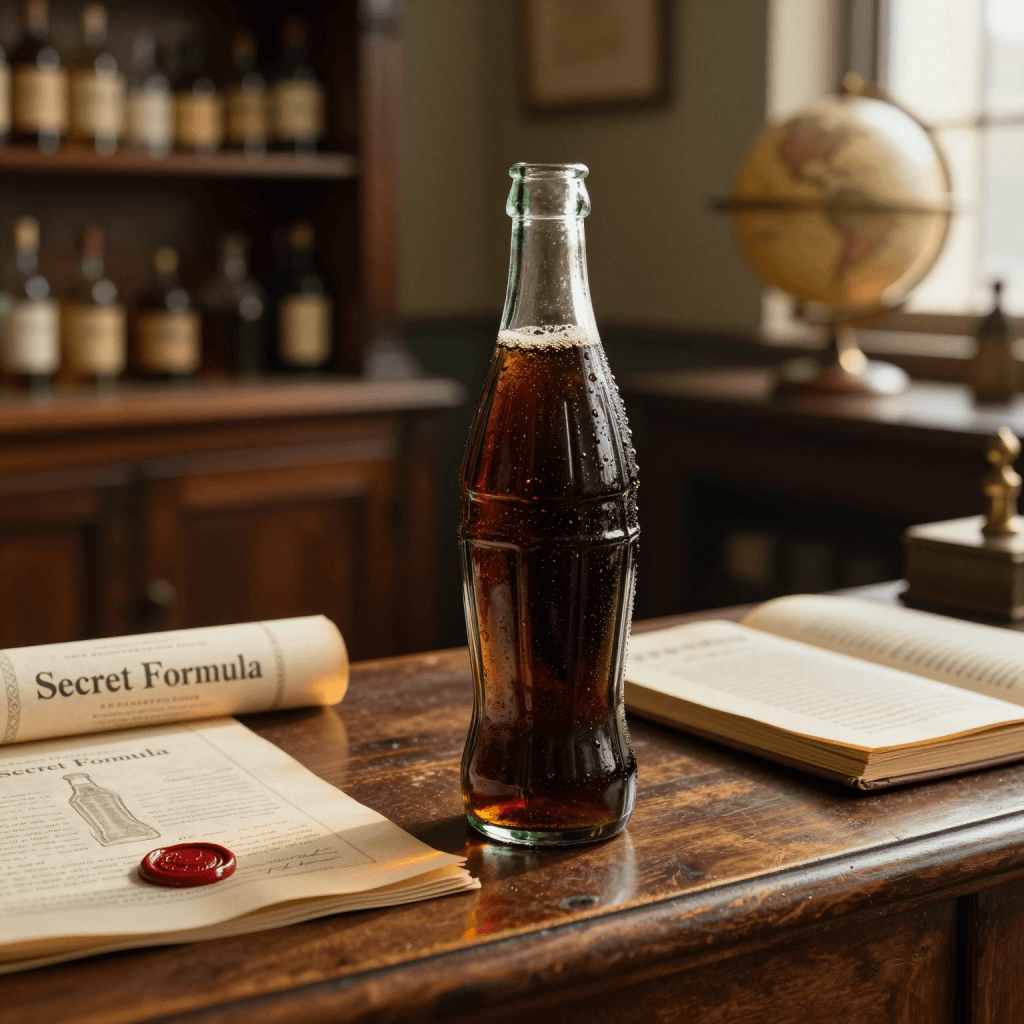
At the heart of the story lay a secret. Early iterations of the Coca‑Cola formula, first created in 1886, included extracts from coca leaf and kola nuts. The resultant synergy between cocaine and caffeine apparently providing a welcome kick to the “nervous businessmen” that consumed it.
While this synergy could have been patented, it was kept as a trade secret, a choice that allowed protection to last indefinitely, so long as secrecy endured.
Instead, secrecy became the strategy, and the myth became part of the brand itself.
This decision proved pivotal. Patents expire; trade secrets, properly guarded, can live forever. Coca‑Cola’s formula remains one of the most famous trade secrets in commercial history.
Today’s beverage companies should consider whether their recipes are best covered by patents or trade secrets. Patents require identifying a functional advantage and last for only twenty years. Trade secrets require good systems to keep the secret and a product or process that cannot be readily reverse engineered.
The Perils of a Descriptive Trade Mark
When “Coca‑Cola” first entered the market, it did so with a name that was descriptive rather than distinctive, drawn directly from its key ingredients. At the time, this was common practice. The late‑19th‑century beverage market was crowded with tonics and soft drinks making similar claims and using similar language.
Competitors appeared with names such as Koke, Koca‑Nola and other cola‑based variants, each trading on the familiarity of the emerging category rather than on a clearly differentiated brand.
Because descriptive names sit on weaker legal foundations, Coca‑Cola could not rely on early trade mark registration alone. Instead, it embarked on decades of costly and persistent enforcement, suing imitators and systematically clearing the field of confusingly similar marks. These efforts were not about a single case, but about shaping consumer perception over time – teaching the market that “Coca‑Cola” meant one thing, and one source only.
Only through sustained use, heavy marketing investment and aggressive enforcement did the name acquire the distinctiveness needed to become a powerful trade mark.
Descriptive or generic names may feel intuitive, but they often defer cost rather than avoid it. The more descriptive the name, the harder it is to protect – and the more time, money and enforcement is required later to turn it into a defensible brand. Coca‑Cola’s tale shows that while distinctiveness can be acquired, it is rarely free.
Patents
At first, carbonated drinks were available only at drug‑stores, where carbonation was added to syrup at the counter. The inability to transport “pre‑fizzed” beverages severely constrained distribution and growth.
In the 1890’s Coca‑Cola then developed a bottling process that kept the “fizz” in enabling it to transport bottles and giving it global scale. This functional innovation was protected through patents, ensuring competitors could not achieve global distribution outside of drug stores – even if they could produce a similar style of drink.
It’s not all about the beverage. Functional solutions to technical and business constraints can also be patented – securing significant value.
Design Rights & more…
As imitators multiplied, Coca‑Cola needed something even more distinctive. Enter the now‑iconic contour bottle. In 1915, the Root Glass Company created a bottle so distinctive it could be identified by touch alone. Coca‑Cola protected it first through design registrations securing exclusive rights to the ornamental shape – for a period of time.
As the term of a design registration is only 15 -20 years, Coca Cola needed to apply strategic thinking to its IP rights. Thus, once the bottle’s shape became synonymous with the brand itself, Coca‑Cola transformed design protection into something far more powerful.
In 1960, the contour bottle achieved something rare: registration as a shape trade mark. This meant the bottle was no longer just a container – it was a badge of origin, protected indefinitely so long as it signalled Coca‑Cola to consumers.
The brand name followed a similar journey. “Coca‑Cola” was originally descriptive of its ingredients and existed in a crowded field of “cola” drinks. Through extensive use, enforcement and marketing, it acquired distinctiveness and became one of the most valuable trade marks in the world – at around USD 60 billion! Even the nickname “Coke” was later claimed and protected. Cola is still considered generic for this type of drink.
Good IP strategy recognises the limitations of each IP right – whether it be scope, jurisdiction or term. Then puts into place other measures to counter those limitations.
Copyright
Coca‑Cola’s jingles, advertising campaigns, characters and artwork were originally protected by the unregistered right of copyright. These creative works reinforced the brand emotionally, not just commercially, adding yet another layer to its IP fortress.
Final Thoughts
Coca‑Cola’s success was never about one IP right, but about orchestration. Trade secrets, patents, designs, trade marks and copyright worked together, each stepping forward at the right moment in the story. It is a reminder to the beverage industry that enduring value is rarely brewed from a single ingredient.
The real tale is not that Coca‑Cola became global – it is that, from its earliest days, it understood how intellectual property could scale a simple drink into an international commercial enterprise.