




IP in the Fast Lane: Lessons from Formula One®
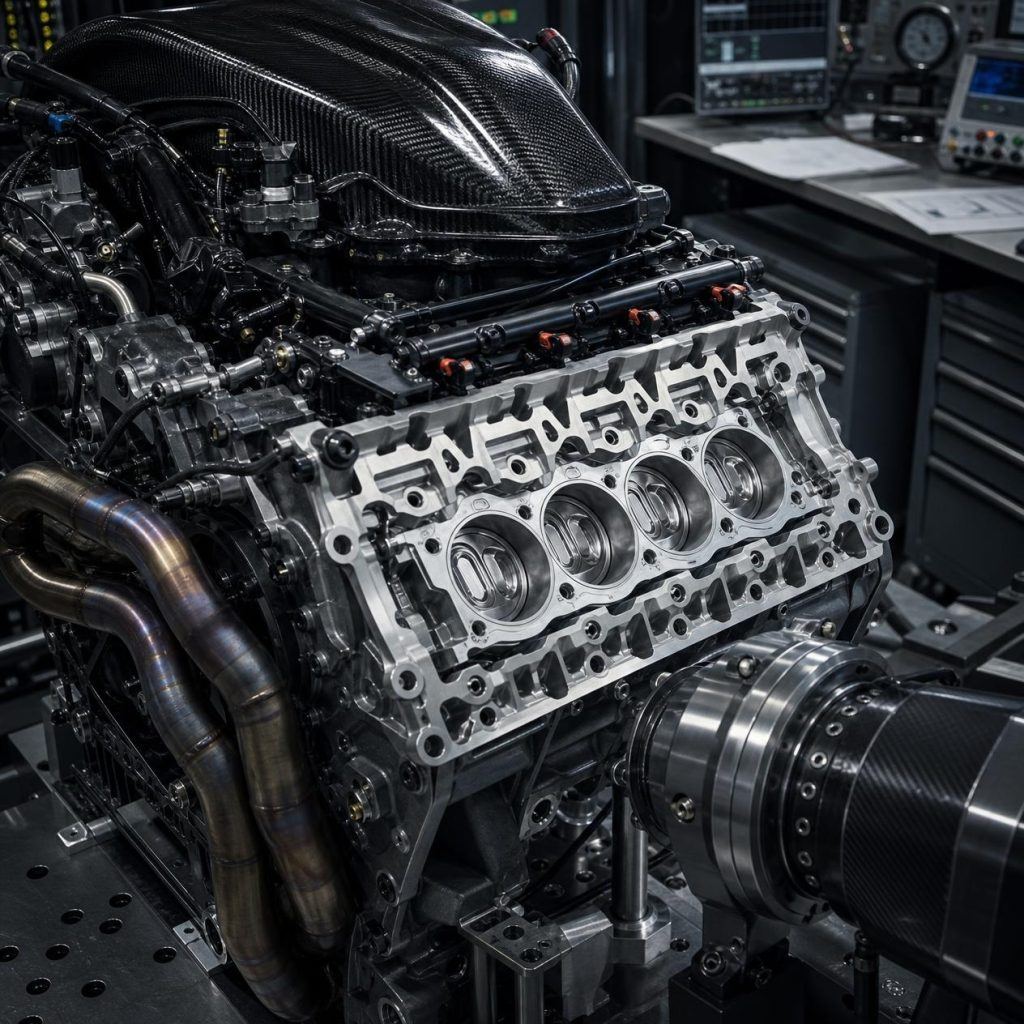
I was fortunate to see Fernando Alonso win the 2012 European Grand Prix in Valencia, Spain, his home country. This was just before the switch to hybrid engines in 2014, and it was thrillingly loud. Nostalgia aside, hybrid technology transformed Formula One engines more profoundly than any change since the move from naturally aspirated to turbocharged power.
Now, with the 2026 regulations, innovation has again been driven hard, this time through increased electrical output to compensate for reduced combustion power, alongside advances in sustainable fuels. That naturally led me to think about how IP strategy applies in a uniquely regulated, fast-paced, high-stakes industry like Formula One®.
Formula One is not only fast moving, but also a highly strategic sport requiring good decision making – at speed., Mario Andretti once said, “If you have everything under control, you are not moving fast enough.” That sentiment perfectly captures the tension at the heart of IP strategy in F1. The question isn’t just what to protect, it’s when, how, and whether to protect it at all.
THE THREE COGS OF F1 IP STRATEGY
The IP engine driving Formula One’s approach to managing their innovations can be distilled into three interconnected cogs: Competitive Edge, Competitive Intelligence, and Collaboration. Each cog assists teams evaluate their innovations, and decide whether to patent, protect, or pivot.
First Cog: Competitive Edge
Race car innovation is relentless, but race-specific technical advances are rarely patented. The reasons are as instructive as they are counterintuitive: Speed of innovation: Patents can take years to grant; F1 innovation moves in weeks. By the time a patent is secured, the technology may already be obsolete, or banned.
Regulatory flux: The FIA’s technical regulations change every season. A breakthrough one year could be irrelevant the next, rendering a patent a costly relic.
The lobbying paradox: If a team patents a genuine competitive advantage, rivals cannot copy it – so they lobby the FIA hoping for the concept to be banned or regulated out of relevance. In F1, litigation is rarely as powerful as lobbying.
For pure race car innovation, trade secrets tend to be the IP vehicle of choice. Teams focus on staying within the constraints of the FIA rules while keeping their edge under wraps. The trick is to innovate fast, exploit faster – unless the technology has legs beyond the track.
Second Cog: Competitive Intelligence
Success in F1 depends on an acute understanding of the commercial landscape. This isn’t just about engineering; it’s about intelligence. Teams must master:
Timing: Innovation windows are short and regulation-dependent. A technology that’s cutting-edge in March might be redundant by June.
Assertiveness: How aggressive are teams in asserting their “rights”, or challenging others’? The line between protection and provocation is razor-thin.
Regulatory barriers: In F1, the rules are the barriers to entry. Understanding where the FIA will draw the line, and when, is as critical as the innovation itself.
Market potential: What can travel beyond F1, and what can’t? A suspension system might be a game-changer on the track, but if it has no application in road cars, formal protection may not be worth the paperwork.
The industrial espionage cases that have rocked F1 over the years, from high-profile lawsuits to covert operations, underline just how valuable (and vulnerable) this intelligence can be. In a sport where milliseconds matter, knowing what your rivals are working on, and whether to patent your innovation, copy them, or challenge it, can make the critical difference between podium and also-ran.
Third Cog: Collaboration
Where innovations can be used beyond Formula One, the IP strategy shifts dramatically. Technologies that are scalable outside of the track say suitable for road vehicles, are patented aggressively. Consider:
Kinetic Energy Recovery Systems (KERS): Pioneered in F1, now a staple in hybrid and electric road cars.
Adaptive suspension: A race-day advantage that evolved into a commercial product for luxury and performance vehicles.
Simulation tools: From wind tunnel software to driver-in-the-loop simulators, these tools have applications far beyond the track.
Driver assist technologies: What starts as a way to shave tenths off a lap time can end up as a safety feature in consumer cars.
In these cases, collaboration with manufacturers, suppliers, and adjacent industries becomes commercially meaningful. Patents make sense because the market is vast and the lifecycle is long. Here, the IP strategy is less about secrecy and more about protecting and commercialising value, turning a race-day innovation into a revenue stream.
THE BIG PICTURE: IP STRATEGY AS INDUSTRY STRATEGY
The thread tying these three cogs together is simple: IP strategy is inseparable from industry context. In Formula One, the rules of the game, how fast things move, where the real barriers to entry lie, which markets matter, and when lobbying trumps litigation, determine whether the right IP route is patent, trade secret, collaboration, or none of the above.
For businesses outside the fast lane of F1, the lessons are just as powerful. Whether you’re a startup pitching for investment or a multinational navigating regulatory shifts, the principles hold:
Know your tipping point: When does an innovation move from being a trade secret to a patentable asset? Your IP strategist can help here.
Understand the landscape: Are regulations a barrier or an opportunity? Can you or your competitors lobby for change rather than take a legal route??
Juggle the timings: Consider development cycle, longevity of technology, and how long you can maintain your competitive edge if formal protections are not secured.
Collaborate where it counts: On the track the teams are highly competitive. But to scale innovation outside the track requires leveraging through partnerships, licensing, or strategic alliances.
FINAL LAP: THE HUMAN TOUCH
Formula One is a masterclass in adaptability. The teams that thrive are not just the ones with the best engineers; they are the ones with the best strategists. They also understand that IP isn’t a one-size-fits-all solution, it’s a tool, and like any tool, its value depends on how, when, and where you use it.
So, the next time you watch a Grand Prix, spare a thought for the IP strategists working behind the scenes. They are not just protecting innovations; they’re navigating a high-speed chess game, where the rules change every season, the stakes are sky-high, and the difference between first and last often comes down to a single, critical decision: patent, protect, or pivot?
As Andretti put it, “Desire is the key to motivation, but it’s determination and commitment to an unrelenting pursuit of your goal that will enable you to attain the success you seek.” In F1, as in business, that pursuit begins with the right IP strategy, at the right speed.